If you’ve ever stood in a print shop, watched a large-format commercial press roll to life, or even held a crisp, perfectly aligned book or magazine in your hands, you’ve probably taken for granted the precision that makes that outcome possible. As a gear supplier who’s spent 12 years designing, manufacturing, and supplying custom gears for printing presses of all sizes—from small-offset desktop models to 10-unit web presses running 24/7 for major publishing houses—I can tell you that none of that crisp alignment, consistent ink application, or smooth operation happens without these seemingly simple, toothed components. Gears aren’t just small parts in a printing press; they’re the nervous system that translates rotational power into every movement that brings ink to paper, and their role shapes everything from a press’s speed to the quality of the final product. Gear
To understand why gears are non-negotiable for printing presses, you first have to wrap your head around how a printing press works at its core, especially for the two most common types: offset lithography, which is what you see in books, newspapers, and magazines, and web-offset, which uses continuous rolls of paper for high-volume runs. For either, the press relies on a series of synchronized movements: the paper must feed at an exact, constant speed, the ink rollers must rotate in perfect time with the plate cylinder (that’s the cylinder with the image etched on it), and the impression cylinder must press with just the right force every single revolution. Mismatch any of these movements by even a fraction of a millimeter, and you get blurry text, misaligned colors, or paper jams that cost print shops thousands of dollars in lost time and waste. That’s where gears come in. They don’t just move parts—they sync them.
Let’s start with speed ratio management, one of the most basic but critical roles gears play. Printing presses don’t run at a single speed across all their components. The motor that powers the press is a high-torque, high-speed unit, but the plate cylinder, which holds the printing image, needs to rotate at a slower, consistent speed to transfer ink evenly. The paper feed mechanism, meanwhile, has to match that exact speed so each sheet or section of the web lines up perfectly with the plate’s image. Gears are how you adjust that speed without losing torque, which is the force that moves heavy components like large impression cylinders or continuous paper rolls. For example, a typical gear pair might have 20 teeth on the motor’s drive gear and 80 teeth on the plate cylinder’s driven gear. That 4:1 ratio means the plate cylinder will rotate at a quarter of the motor’s speed, with four times the torque—exactly what’s needed to turn the heavy cylinder without slipping. Without gears, you’d have to rely on belts or chains, which stretch over time, slip, and can’t maintain that tight, consistent ratio. I’ve seen dozens of new print shops try to save money by using chain drives instead of custom gears for their small offset presses, only to come to me six months later with blurry prints and wasted stock because the chain stretched and threw off the speed ratio.
Next, there’s torque transfer, which is where the quality of gears becomes more important than their size. Printing presses are tough machines. A single web press can handle 10,000 feet of paper per minute, and when the press is running at full speed, the load on each component is enormous. The gear that drives the paper feed, for example, has to pull that continuous roll of paper through the press without tearing it, even if the paper is slightly thicker for a special edition book. If a gear is made with low-quality material—like standard steel instead of heat-treated alloy, or with teeth that are cut unevenly—it will flex or wear down quickly under that load. That flex throws off the timing, causing paper jams, or the worn teeth will create gaps in rotation, leading to inconsistent ink application. Years ago, I supplied a set of hardened steel gears to a regional newspaper that was using generic gears from a hardware supplier for their 24/7 night shift runs. They were replacing gears every two weeks, costing them thousands in downtime. After switching to our precision-machined, case-hardened gears, they went 18 months without a gear replacement on that line. That’s the difference torque-resistant gears make: they handle the repetitive, high-load operation of a printing press without failing.
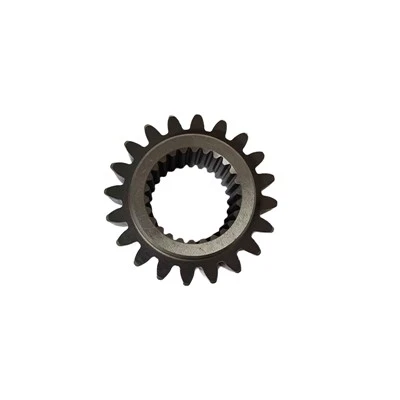
But gears aren’t just about moving parts—they’re about timing, and that’s where their most specialized role comes in: synchronous motion control. For offset printing, the plate cylinder doesn’t touch the paper directly. It transfers ink to a rubber blanket cylinder, which then presses the ink onto the paper. All three cylinders—the plate, blanket, and impression—have to rotate in exact sync, so the image on the plate lines up perfectly with the blanket, which lines up perfectly with the paper. For multi-color presses, you have a separate cylinder for each color (cyan, magenta, yellow, black, plus spot colors), and each of those cylinders has to be timed within thousandths of an inch of the others. That’s why most high-end presses use helical gears instead of spur gears. Spur gears are simple, cheap, and work well for low-load applications, but they make a lot of noise and create small “shocks” when their teeth engage, which can throw off timing at high speeds. Helical gears have angled teeth that engage gradually, so they transfer power smoothly, reducing vibration and keeping all cylinders in sync even when the press is running at 15,000 impressions per hour. I worked with a large commercial print shop that was using spur gears on their four-color press and reporting color misalignment in 2% of their runs. Once we swapped in our precision-ground helical gears, that misalignment dropped to less than 0.1%—a massive improvement that cut their waste in half and boosted their on-time delivery rate for client deadlines.
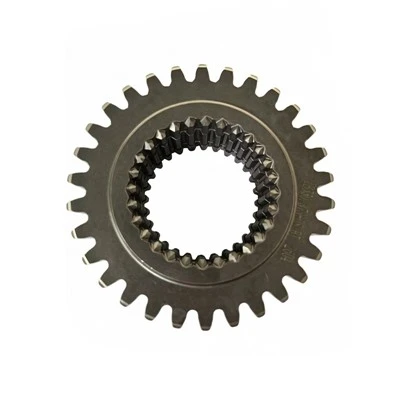
There’s another role that’s less talked about but just as critical: load distribution, especially for older presses or custom presses that aren’t built with off-the-shelf parts. Many print shops still operate presses that are 20, 30, even 50 years old, and finding replacement parts for these models can be a nightmare. Gears that are worn or damaged on a vintage press have to be replaced with an exact match, but even for newer custom presses, gears are designed to distribute the load evenly across every tooth, so no single tooth takes too much stress. If a gear’s teeth are misaligned during manufacturing, the load is concentrated on a small part of each tooth, leading to early wear and failure. At my company, we do custom gear manufacturing for this exact reason—for presses that need replacement gears, or for new presses being built by OEMs that need tailored gears to fit their unique design. We recently made a set of double helical gears for a specialty textile press that prints fabric, not paper, so the load on each gear was different than a standard printing press. Our team adjusted the gear pitch and tooth profile to distribute the fabric’s tension evenly across the gear teeth, which reduced wear by 30% compared to the OEM’s original gears.
Of course, no part of a printing press operates in a vacuum, and gears work in tandem with other components, but they’re the one component that ties all those components together. The motor powers the drive shaft, which turns the primary gear, which turns the gears for the plate cylinder, blanket cylinder, ink rollers, and paper feed. If the primary gear is off, every part down the line is off. If a gear has a worn tooth, that one tooth will cause a ripple effect through the entire press’s movement, leading to defects in every impression until it’s replaced.
This is why, as a gear supplier, I don’t just sell gears—I partner with print shops to solve their specific problems. It’s not one-size-fits-all. A small desktop offset press for a local printer needs a different gear than a 10-unit web press running national magazines. A vintage newspaper press needs a custom-machined replacement gear, while a new specialty press might need a custom-designed gear to handle unique loads like heavy paper or fabric. I’ve spent countless hours on site at print shops, watching their presses run, talking to their operators, and measuring the stress on each component to design gears that fit their exact needs, not just a generic spec.
If you’re a print shop owner, press operator, or OEM building new printing equipment, you already know how much downtime and wasted stock cost your bottom line. Gears might seem like a small detail, but they’re the difference between a press that runs smoothly, delivers high-quality prints, and meets deadlines, and one that’s always breaking down, wasting material, and costing you money. The next time you hold a perfect book, a clear newspaper, or a vibrant magazine, remember that the crispness and alignment you’re seeing are the result of thousands of precise gear movements, working in sync, every second the press is running.
If you’re looking to upgrade your press’s gears, replace worn parts, or source custom gears for a new press, we can help you find the right solution tailored to your needs. We work with print shops of all sizes, from local small operations to large national commercial presses, to deliver durable, precision-machined gears that keep your presses running at peak performance.
Transmission Shaft References
- Kipp, M. (2020). Gear Design for Industrial Applications. Industrial Press Inc.
- Richardson, K. (2018). Printing Press Mechanics and Component Reliability. Journal of Print Technology and Engineering, 12(3), 45-62.
- Bosmans, J. (2021). High-Speed Synchronous Motion Control for Web Printing Presses. International Journal of Printing Science and Technology, 29(2), 112-128.
- American Gear Manufacturers Association. (2019). AGMA Standard for Gears for Printing Machinery. AGMA Publication 2002-A19.
Yancheng Botu Transmission Machinery Co., Ltd.
As one of the most professional gear manufacturers and suppliers in China, we have world-leading production equipment and strong manufacturing capabilities. Please rest assured to wholesale cheap gear for sale here from our factory. Contact us for more details.
Address: No. 33, Yongxing Road, Economic Development Zone, Jianhu County, Yancheng City, Jiangsu Province
E-mail: 15261979878@163.com
WebSite: https://www.ycbtcdjx.com/
