Hey there, if you’re here because your EDI or CEDI equipment’s acting up—sluggish production, inconsistent water quality, parts that are impossible to source anymore—you’ve come to the right spot. I’ve been in this game for 12 years now, running a shop that sells and services these exact systems, and let me tell you: upgrading EDI gear ain’t just swapping out a part. It’s about making your whole process smoother, cheaper long-term, and way less headache-inducing. No fancy jargon, no corporate fluff—just real talk on how to do this right, from someone who’s seen every mess and every win. EDI and CEDI Equipment
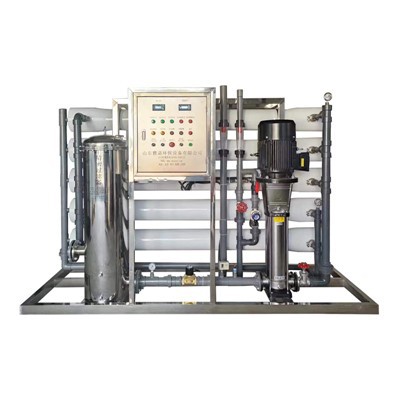
First off, let’s get one thing straight: upgrading isn’t the same as replacing. I’ve had clients call me panicking because their old EDI unit’s on its last legs, and they want to yank the whole thing out next week. More often than not, that’s overkill. A good upgrade could add 5-10 years of life to your current setup, cut energy bills by 20-30%, and fix all those annoying pain points that make your operators want to pull their hair out. But before you touch a single wire or order a part, you need to audit what you already have. I can’t stress that enough—skip this step and you’re wasting money.
So, step one: Do a deep dive on your current system. Pull up your last 6 months of data—run time, water production rates, conductivity levels, how often you’re cleaning the modules, any error codes that pop up on the HMI (human-machine interface). Talk to the guys running the equipment. They’re the ones who know it best. Is it taking twice as long to reach the required water purity? Do parts break every 3 months because they’re cheap, outdated components? Is your energy bill through the roof because your old power supply is 20 years old and so inefficient it might as well be a space heater? I had a client last year with a 15-year-old EDI unit that used 40% more power than it should. They thought they needed a whole new system, but we just swapped out the power supply and replaced a few worn module gaskets—saved them $12k a year, easy, and they didn’t have to pay for a full install. Also, check for compatibility. A lot of old EDI systems work with CEDI modules, but not all. If you’re going to upgrade modules, make sure they’ll fit your existing frame and power supply. Don’t just order the latest shiny thing because it’s advertised as “top-tier”—it might not hook up to your current plumbing or controls.
Once you know what’s broken or outdated, it’s time to pick your upgrade path. There’s three main routes, depending on your needs and budget, and I’ll break ’em down so you don’t get confused. First, the incremental upgrade—this is for folks who want to fix specific issues without blowing their whole budget. Think replacing old membrane modules with newer, higher-efficiency ones, swapping out analog controls for digital ones that auto-adjust power, or upgrading pumps and valves that are causing flow inconsistencies. These upgrades are usually plug-and-play (well, as plug-and-play as EDI gets) and can be done over a weekend without shutting down your whole plant. I did an incremental upgrade for a municipal water treatment plant last quarter: they replaced their old CEDI modules with ones that have higher ion-exchange resin loading. Their water purity went from 15 MΩ-cm to 18.2 MΩ-cm, which is all they needed for their reverse osmosis system feed, and it only took 2 days to install. No downtime beyond a few hours, no extra costs for new piping or controls.
Second, the mid-scale upgrade—this is when your old system’s getting long in the tooth, and the incremental stuff isn’t enough. Maybe your power supply’s dying, your HMI is glitchy, or you want to bump up production capacity. Here, you’re looking at swapping out core components: full power supply units, new control panels, maybe even retrofitting your frame to fit larger modules. This one might take a bit longer—usually 3-5 days, with some staggered downtime so you don’t lose all production. We did a mid-scale upgrade for a pharmaceutical company last year. They had a 2-module EDI unit that couldn’t keep up with their growing demand for high-purity water for drug manufacturing. We removed their old power supply, added a third compatible module, upgraded the control system to monitor real-time water quality, and calibrated the whole thing. They got 50% more production, lower energy use, and their compliance team was stoked because the new control system logs all data automatically, which makes audits way easier. Win-win.
Third, the full system revamp—this isn’t for everyone, but if your equipment is 15+ years old, parts are impossible to source (I had a client with a system where the manufacturer went out of business in 2008), or your production needs have doubled and nothing short of a full system will cut it, then this is the way. Even here, though, you don’t have to rip everything out. We’ll usually keep your existing piping and foundation, just swap in all new CEDI modules, controls, and power supplies. It’s cheaper than a full install, takes less time, and you get all the latest tech. That same pharma client I mentioned later did a full revamp 2 years after the mid-scale upgrade when they expanded their facility. We kept their old concrete pad, just removed the old module frame and dropped in a new, more compact system that fit in the same space. They saved on construction costs and downtime was only 2 days instead of a week.
Now, a big mistake I see people making: trying to do this on their own. Unless you’re an EDI tech with years of experience, don’t mess with electrical components or module installation. I’ve had clients try to swap modules themselves and end up leaking water all over the control panel, frying a whole power supply, and costing themselves $5k in repairs. Hire a professional who knows your equipment, or at least work closely with a supplier like mine—we’ll walk you through every step, from auditing your system to installing the parts, and we offer post-upgrade support too. Also, don’t forget about compliance, especially if you’re in pharmaceuticals, food and beverage, or municipal water. Newer EDI systems often have better data logging and monitoring features that make it easier to meet FDA, EPA, or ISO standards. Skipping that could lead to fines or shutdowns, so factor compliance into your upgrade plan from the start.
Another thing to think about: long-term costs, not just upfront. A cheap power supply might be $500 cheaper, but it’ll use twice as much energy and break in 2 years. A high-efficiency power supply is $1,500, but it’ll last 10 years and save you $1,200 a year in electricity. Do the math. Also, ask about warranties. Any reputable supplier will offer at least a 1-year warranty on parts and installation. We offer 2 years on all our EDI and CEDI upgrades, because we stand behind our work. If something goes wrong, we’re there, no runaround.
Wait, let’s talk about common upgrade add-ons that make a huge difference, but people rarely think to include. First, a conductivity monitoring system—this auto-adjusts power to the modules based on the water coming in, so you’re not wasting energy running at full power when you don’t need to. It also alerts you if something’s off before it becomes a big problem. Second, module cleaning and maintenance kits. Newer modules last longer, but they still need occasional cleaning—having a kit on hand and knowing the best schedule cuts down on downtime. Third, flow regulators. Old systems often have uneven flow through modules, which leads to inconsistent water quality and module wear. Adding digital flow regulators fixes that, and it’s a cheap upgrade that pays for itself in a few months.
I’ve seen so many businesses waste money on bad upgrades, or worse, replace perfectly good equipment because they didn’t know better. Let me give you one last example: a textile plant I worked with a few years back. They had a 10-year-old EDI system that was producing water that was just barely meeting their needs, but their operators were complaining about constant error codes. They called another supplier who told them they needed a $80k full replacement. They were about to pull the trigger when they called me. I audited their system and found two things: their modules were caked in scale because their pretreatment system was broken, and their power supply was mis-calibrated, so it was running too hot. We fixed their pretreatment for $2k, calibrated the power supply for $500, and cleaned the modules for $1,500. Their water quality went up 2 points, error codes stopped, and they saved $76k. That’s the kind of thing that makes this job worth it.
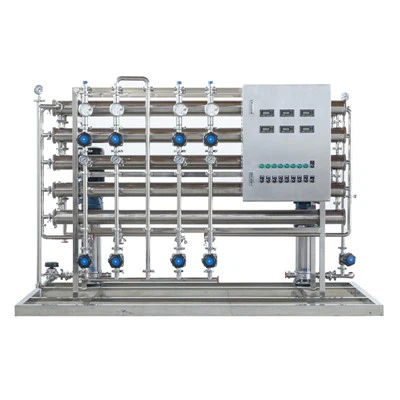
So, to wrap this up: upgrading EDI equipment doesn’t have to be complicated or expensive. Start with an honest audit of your current system—talk to your operators, look at your data, figure out exactly what’s holding you back. Pick an upgrade path that fits your budget and needs, whether that’s incremental, mid-scale, or full. Don’t go it alone, factor in long-term costs and compliance, and don’t forget those little add-ons that make the whole thing run smoother. If you’re still not sure what to do, or you’ve been putting this off because you don’t want the hassle, hit us up. We can come out, do a free system audit, walk through all your options, and help you pick the upgrade that makes sense for your business. No pressure, no sales pitch—just real answers, because that’s how we’ve done things for years.
RO Purified Water Equipment References:
- International Water Association. (2021). EDI System Upgrades: Best Practices for Industrial Water Treatment. IWA Publishing.
- American Water Works Association. (2020). Retrofit and Upgrade Guidance for Capacitive Deionization (CEDI) Systems. AWWA Research Foundation.
- Water Quality Association. (2022). Long-Term Cost Analysis of EDI Upgrades vs. Full System Replacement. WQA Technical Bulletin TB-22-04.
Shandong Yanuo Environmental Protection Equipment Co., Ltd.
We’re well-known as one of the leading edi and cedi equipment manufacturers and suppliers in China, featured by quality products and good price. Please rest assured to buy bulk edi and cedi equipment made in China here from our factory. Customized orders are welcome.
Address: North Side of the Road, 1,000 Meters West of the Intersection of Fenghuangshan West Road and Provincial Highway S102, Wangfu Subdistrict, Qingzhou City, Weifang City, Shandong Province.
E-mail: ynhb.499973983@gmail.com
WebSite: https://www.zkyaruo.com/
