As an EPS block molding machine supplier, I talk to plant managers and safety supervisors every week—people who’ve dealt with the sharp, smelly aftermath of an EPS machine safety lapse, like a burned worker’s arm or a a fire that shut down their line for three days. EPS (expanded polystyrene) block molding is a cornerstone for packaging, construction insulation, and consumer goods, but its raw material and molding process have hidden risks: flammable polystyrene beads, high-pressure steam, scalding mold surfaces, and toxic fumes from overheated plastic. Over the past 12 years, I’ve seen operators skip simple checks that lead to injuries, and I’ve seen facilities that cut corners on machine upkeep put their teams in constant danger. Today, I’m laying out the practical, science-backed steps we at [our company name] teach every customer—steps that keep workers safe while keeping production running smoothly. EPS Block Molding Machine

First, let’s talk about what makes EPS block molding machines risky. Unlike smaller, consumer-facing tools, these machines weigh several tons and operate with 100–150 psi steam to melt polystyrene beads into dense blocks. The key hazards break down into four categories: thermal (scalds from steam lines and mold surfaces), mechanical (pinch points between mold halves, moving carriages), fire/explosion (EPS is highly flammable, and overheated beads can ignite from steam leaks or electrical faults), and air quality (styrene fumes released during molding, which irritate lungs and are a possible long-term health risk). I’ve had a customer in Indiana tell me his team suffered three scalds in six months because they didn’t lock out the steam line when clearing a jam. Another in Texas had a small fire start because a mold seal cracked, spraying hot beads onto an overheated control panel. These aren’t random “accidents”—they’re preventable with consistent protocols tied directly to how our machines are designed to run.
The first non-negotiable step I push all customers to adopt is machine-specific lockout/tagout (LOTO) tailored to EPS molding, not generic LOTO. A 2022 OSHA report found that 42% of industrial machinery injuries happen because workers don’t properly isolate energy sources before maintenance, and EPS machines have three high-risk energy streams: steam, compressed air, and electrical. Generic LOTO forms often miss steam: many operators just turn off the machine’s on/off switch, not the main steam valve that can still leak into the mold for 10 minutes after shutoff. Here’s how we design LOTO for our machines, and what we require customers to implement: First, label every energy source with large, color-coded tags—red for steam, blue for compressed air, yellow for electrical—so no one can mistake which valve controls what. Second, add a secondary lock to the main steam line that only works if the line is fully depressurized; this is a feature we build into all our new machines, but for older models, we work with local fabricators to retrofitting the same system. Third, create a pre-maintenance checklist that mandates waiting 15 minutes after closing the steam valve to open the mold, because residual steam can still escape and scald anyone leaning in to clear a stuck block. I had a customer in Ohio skip that 15-minute wait last year, and a 22-year-old operator ended up with third-degree burns on his forearm when residual steam burst through a mold joint. That incident cost him $120k in downtime and workers’ comp—something he still brings up in our weekly check-ins, now that he follows the LOTO checklist like gospel.
Next, controlling fire and explosion risks—this is the biggest long-term safety issue for EPS molding plants, because EPS dust is everywhere. When polystyrene beads are loaded into the machine hopper, tiny dust particles circulate in the air, and at concentrations of 25–65 grams per cubic meter, they’re explosive. I once visited a plant in Michigan that had a near-miss: an operator was grinding an old metal mold bracket with a handheld grinder, and a spark landed on a dust layer in the hopper. The fire department showed up and cleared half the plant, but no one was hurt because the plant had installed a dust extraction system. That said, dust extraction doesn’t work if it’s maintained poorly. Here’s our guidance for our customers: First, install ATEX-certified (or OSHA-approved) explosion-proof electrical components—lights, control panels, and grinder motors—only from our authorized suppliers. We test every electrical component paired with our machines for spark resistance, but many customers cut costs on third-party components that don’t meet standards. Second, schedule daily dust cleaning, not weekly. We provide a small, handheld HEPA vacuum for each operator, and we teach them to use it on the hopper, mold edges, and floor around the machine at the start and end of every shift. Third, add a heat detection system mounted 12 inches above the mold’s top surface. Our machines come with a standard heat sensor that triggers an alarm at 180°F (the max safe surface temperature, per ASTM E1996, a standard for industrial thermal safety), but we tell customers to add a secondary sensor linked to the fire suppression system, which automatically cuts steam flow and releases CO2 if the temperature hits 190°F. I had a customer in Florida skip that secondary sensor, and a mold overheated during a 2 a.m. shift, burning a $8,000 mold and shutting down production for four days. He paid for the sensor system on his next order, and has had zero fire incidents since.
Then, protecting workers from air quality hazards—styrene fumes. During the molding process, polystyrene releases styrene, a volatile organic compound (VOC) that irritates the eyes, nose, and throat, and long-term exposure is linked to neurological effects. OSHA’s permissible exposure limit (PEL) for styrene is 100 parts per million (ppm) over an 8-hour shift, and many older EPS machines don’t have proper ventilation. Here’s what we mandate for our customers: First, install local exhaust ventilation (LEV) hoods directly on the mold’s vent line, not just general plant ventilation. General ventilation can’t pull fumes away fast enough when the mold opens during cycle time, but LEV hoods capture 90% of fumes right at the source, per a 2021 study from the Industrial Hygiene Association. We work with customers to size these hoods to match the exact mold size of their machine, so they don’t waste energy or miss fumes. Second, provide disposable N95 masks only when the LEV system is offline or under maintenance. Many companies give N95 masks as a universal solution, but they don’t fit properly, so workers still breathe in fumes. We also require annual air quality testing, not just by the plant’s safety team, but by an independent industrial hygienist—we offer discounted testing through our partner network to make this easier for new customers. I once had a customer in Pennsylvania who thought his ventilation was fine, until an independent test found styrene levels at 140 ppm. He’d been using the same ventilation system since 2012, and the mold vents had gotten clogged over time. Cleaning the vents fixed the issue, and since then, he tests his air every six months.
Mechanical safety is often overlooked because the moving parts on an EPS machine are hidden behind safety guards, but pinch points between the mold halves and moving carriages are still a risk. In 2023, I got a call from a customer in Illinois whose operator reached into the machine to pull a stuck block, and his glove got caught in the moving carriage, pulling his whole hand in. The operator lost a finger, and the investigation found that the safety guard had been removed to make room for a faster production cycle. That’s a common mistake: plant managers think removing guards boosts output, but OSHA data shows that machines with removed guards have 3x more injuries, and production is down 15% on average because of downtime from accidents. Here’s our rule for mechanical safety: never remove or modify safety guards, and if a guard breaks, order a replacement from our factory within 24 hours. We ship replacement guards for all our machines worldwide for free, because we’ve seen the cost of waiting for a replacement—one customer in Canada waited three days for a guard, and had to use a temporary wooden barrier, which an operator ignored, leading to a near-miss. We also install interlocks on all our safety guards: if a guard is open (even a crack), the machine automatically stops the mold from closing, so no one can get injured even if they try to work around it. For older machines we retrofit, we add these interlocks as a standard upgrade, because they’re the single most effective way to prevent mechanical lacerations and crush injuries.
Finally, training isn’t a one-and-done thing—it’s ongoing. We train every customer’s operators, supervisors, and maintenance team in a two-day hands-on workshop when they take delivery of a machine, but we also provide quarterly refresher webinars and on-site training visits for any customer that needs it. A common mistake plants make is only training new operators once, but EPS machine safety changes if you swap out a mold or upgrade the control panel. Last year, a customer in Arizona upgraded his machine’s control system without retraining his operators, and they accidentally set the steam pressure to 180 psi (50 psi over the safe limit), which cracked a mold and sprayed hot polystyrene beads. The team had to go through a full retraining, and we now include a control system training module in all our machine manuals. We also require customers to assign a dedicated safety lead for each machine, someone who is responsible for updating checklists, tracking incidents, and reporting any issues to our team. This isn’t about micromanaging—this is about building a culture where safety isn’t just a rule, it’s part of daily work.
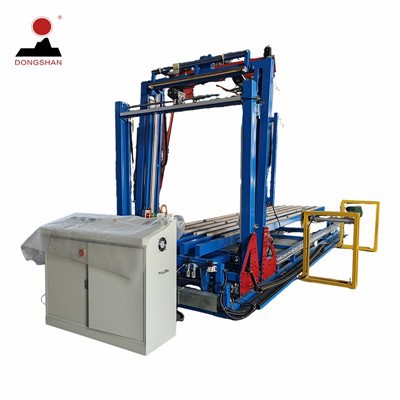
At the end of the day, the goal isn’t just to follow OSHA rules—it’s to make sure workers go home at the end of their shift feeling safe, no burns, no injuries, no lingering health risks. We build our EPS block molding machines with safety as a core design feature, but those features only work if they’re paired with consistent protocols and training. If you’re running an EPS plant and looking to upgrade your machines or review your safety practices, we’re here to help. Connect with our team to discuss your specific needs, whether you’re retrofitting an old machine or ordering a new one, and we’ll walk you through every step to keep your team safe while keeping production on track.
EPS Block Molding Machine References
OSHA. (2022). Lockout/Tagout: Industry-Specific Injury Data for Industrial Machinery. Occupational Safety and Health Administration.
ASTM E1996-22. (2022). Standard Practice for Thermal Safety Assessment of Industrial Machinery. American Society for Testing and Materials.
American Industrial Hygiene Association. (2021). Local Exhaust Ventilation for VOC Control in EPS Molding Facilities. AIHA Press.
Hangzhou Fuyang Dongshan Plastic Machinery Co., Ltd.
Hangzhou Fuyang Dongshan Plastic Machinery Co., Ltd. is one of the most professional EPS block molding machine manufacturers and suppliers in China, featured by quality products and low price. Please feel free to wholesale advanced EPS block molding machine made in China here and get quotation from our factory. Customized orders are welcome.
Address: 101 Guanting, Baiqian Villige, Luzhu Town, Fuyang District, Hangzhou City, Zhejiang Province, China
E-mail: xu@dong-shan.cn
WebSite: https://www.epseppmachinery.com/
