Yo, what’s up, folks! I’m a supplier of specialty paper, and today I wanna chat about something super interesting: the conductivity of specialty paper. Specialty Paper
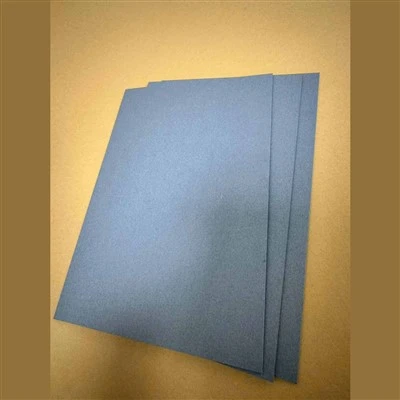
So, let’s start from the basics. Conductivity, in simple terms, is the ability of a material to conduct electricity. You might be thinking, "Paper? Conduct electricity? Isn’t paper supposed to be an insulator?" Well, that’s true for regular paper, but specialty paper is a whole different ballgame.
Specialty paper is designed with specific properties to meet various industrial and commercial needs. When it comes to conductivity, we’re talking about paper that has been engineered to allow the flow of electric current. This can be achieved through different methods.
One common way is by adding conductive materials to the paper during the manufacturing process. For example, carbon nanotubes or metallic particles can be incorporated into the paper pulp. These conductive additives create a network within the paper structure that enables electrons to move freely. Carbon nanotubes are especially cool because they’re incredibly thin and strong, and they have excellent electrical conductivity. When they’re mixed into the paper, they form a sort of web that can carry an electric charge.
Another method is to coat the paper with a conductive layer. This could be a thin film of metal, like silver or copper, or a conductive polymer. The coating adheres to the surface of the paper, providing a pathway for electricity to flow. The advantage of coating is that it can be applied precisely, and the conductivity can be controlled more easily. You can adjust the thickness of the coating to get the right level of conductivity for your specific application.
Now, you might be wondering, why would anyone need conductive specialty paper? Well, there are actually many practical uses for it.
In the electronics industry, conductive paper can be used as a flexible circuit board. Traditional circuit boards are usually made of rigid materials, but specialty paper offers a more flexible and lightweight alternative. It can be bent and folded without losing its electrical properties, which makes it ideal for use in wearable devices, like smartwatches and fitness trackers. You can print electronic circuits directly onto the conductive paper, creating compact and efficient electronic components.
Another application is in the field of sensors. Conductive paper can be used to make sensors that detect changes in temperature, humidity, or pressure. When the environmental conditions change, the electrical conductivity of the paper also changes. This change can be measured and used to provide valuable information. For example, in a smart home system, conductive paper sensors can be placed around the house to monitor the temperature and humidity levels. The data collected by these sensors can then be used to adjust the heating and cooling systems automatically.
In the packaging industry, conductive paper can be used to protect sensitive electronic components from electrostatic discharge (ESD). Electrostatic charges can build up on the surface of regular packaging materials and cause damage to electronic devices. Conductive paper, on the other hand, can dissipate these charges safely, preventing any potential harm to the products inside the package.
As a specialty paper supplier, I’ve seen firsthand how the demand for conductive specialty paper is growing. More and more industries are realizing the benefits of using this innovative material, and they’re looking for high – quality products that meet their specific requirements.
When it comes to the quality of conductive specialty paper, there are a few key factors to consider. First of all, the conductivity level is crucial. Different applications require different levels of conductivity, so we need to be able to produce paper with a wide range of conductivity values. We use advanced testing equipment to measure the conductivity accurately and ensure that our products meet the customer’s specifications.
The uniformity of conductivity across the paper is also important. If the conductivity is not uniform, it can lead to inconsistent performance in electronic applications. We use strict quality control measures during the manufacturing process to ensure that the conductive additives or coatings are evenly distributed throughout the paper.
Another factor is the durability of the paper. The paper needs to be able to withstand the conditions of its intended use. For example, if it’s going to be used in a high – humidity environment, it should be resistant to moisture. We conduct various tests, such as humidity and temperature cycling tests, to make sure that our conductive paper can perform well in different conditions.
We also pay a lot of attention to the environmental impact of our products. We use sustainable manufacturing processes and materials whenever possible. For example, we source our paper pulp from responsibly managed forests, and we try to minimize the use of harmful chemicals in the production of conductive additives and coatings.
If you’re in an industry that could benefit from conductive specialty paper, I’d love to have a chat with you. Whether you’re working on a new electronic device, a sensor project, or need ESD – protected packaging, we can provide you with the right solution.
We have a team of experts who can help you choose the best type of conductive specialty paper for your application. We can also work with you to develop custom – made products if your requirements are unique. We’re committed to providing high – quality products and excellent customer service.

So, if you’re interested in learning more about our conductive specialty paper or want to discuss a potential project, don’t hesitate to reach out. We’re here to help you take your products to the next level with our innovative specialty paper solutions.
Black Paper References
- "Handbook of Paper and Paperboard Packaging Technology" by Hanser Gardner Publications
- "Conductive Polymers and Plastics: Fundamentals, Applications and Markets" by Rapra Technology Limited
- Research papers on the application of carbon nanotubes in paper conductivity from scientific journals such as "Advanced Materials" and "Journal of Materials Chemistry"
Dongguan Banyan Material Co., Ltd.
We are one of the most experienced specialty paper manufacturers and suppliers in China, also support customized service. Please feel free to wholesale bulk eco-friendly specialty paper from our factory. Quality products and reasonable price are available.
Address: NO.167, Meijing West Road, Songmushan, Dalang Town, Dongguan City, Guangdong Province, China
E-mail: Sales_chris@yspaper.com
WebSite: https://www.paperyoung.com/
