Hey there, if you’ve ever stared up at a dropped ceiling, that grid of thin metal bars holding up all those ceiling tiles? That’s what we do here—we make those T grids, and one question we get asked at LEAST 10 times a day is: “What’s the load-bearing capacity of a ceiling T grid?” Like, yeah, it’s a super basic question, but it’s not as simple as just saying “it holds X pounds” — there’s a ton of stuff that changes how much those little grids can actually take, and if you get it wrong? That’s how you end up with a sagging ceiling, or worse, tiles crashing down on someone. Let’s break this down like we chat with our contractors, installers, and DIYers every single day. Ceiling T Grid
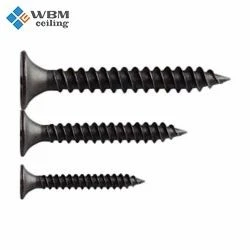
First off, let’s stop overcomplicating “load-bearing capacity” here. For ceiling T grids, we’re talking about two main types of load, right? There’s the dead load— that’s the weight of the tiles themselves, plus the grid bars and any extra stuff that’s PERMANENTLY attached, like fire sprinkler heads that mount to the grid, or a tiny vent. Then there’s the live load— that’s the random, temporary stuff, like someone leaning a ladder up there to change a light bulb, or a maintenance worker stepping on a tile while fixing something above. Most people only think about dead load, but live load is where mistakes get made. We’ve seen so many installs where someone only calculated tile weight, forgot the sprinkler, and within a year, that grid’s sagging so bad it looks like a water slide.
Now, the biggest factor that actually determines load capacity? It’s NOT just the T grid bar itself — it’s the size of the grid module. Wait, what’s a module? That’s the space between the main runners (the long horizontal bars) and the cross tees (the shorter ones that connect them). The most common module is 2×4 feet, right? Like, each cross tee spans 2 feet between main runners, and each tile is 2×4, so that’s the standard. But if you go to a 2×2 module? That’s way smaller squares, more cross tees, way sturdier. Or if someone uses a weird module, like 2×3? That’s not standard, and it changes everything. We had a guy last year do a weird custom install with 2×3 modules, call us panicking because his grid was sagging, and turns out he used standard 2×4 cross tees for the 2×3 space — way too much span for that tiny bar.
Next up: the gauge of the metal. This is another huge one, and it’s where a lot of cheap imported grids mess up. Metal gauge means how thick the steel is. Thinner gauge is a higher number— like 25 gauge is super thin, 18 gauge is thick. For residential or light commercial (like a small office, coffee shop), most of our customers go with 20 or 22 gauge. Those hold enough weight for standard tiles, maybe a couple extra fixtures. But if it’s a gym, a classroom with heavy projectors, or a retail space where they hang stuff from the ceiling? We push 18 gauge — it’s way thicker, stiffer, can take way more load without bending. We test all our grids, right? Our 22 gauge 2×4 modules: dead load is usually around 15 to 20 pounds per square foot, live load about 5 to 10. Our 18 gauge? Dead load up to 30 pounds per square foot, live load can hit 15. But wait— that’s not a guarantee, because the next factor is how the grid is installed.
Installation method is make or break. A T grid is only as good as how you hang it from the actual ceiling structure. If you just nail the main runners to the ceiling joists with random nails, not spaced correctly, that’s garbage. The standard is to hang main runners every 4 feet with wire hangers— the same ones we sell, by the way, because flimsy hangers will bend before the grid does. Also, if you don’t use cross tee connectors, or you use cheap plastic ones that break? The cross tees will pull out, and suddenly half your tiles are loose. We had a job once where a contractor used random wire he found at the job site instead of our galvanized hangers— within six months, the hangers rusted, snapped, and the entire middle of the ceiling collapsed. No joke. So even the best grid in the world is useless if you install it wrong.
Wait, also, what kind of space is this ceiling in? A kitchen, for example, is humid, right? Steam from stoves, grease, moisture from a dishwasher. If you use a regular steel T grid in a kitchen, it’ll rust over time, which weakens the metal and drops the load capacity by 20-30% after a couple years. That’s why we sell galvanized T grids and even coated stainless steel ones for high-moisture spaces. A customer put our regular 22 gauge grid in a commercial kitchen a few years back, called us two years later complaining of sagging, turns out rust ate away at the bars so much they couldn’t hold even the tile weight, let alone the exhaust hood that was mounted. So environment matters too— moisture, chemicals, temperature changes all affect the grid’s strength over time.
Let’s talk about common myths, because we hear these all the time. First myth: “All T grids are the same, just buy the cheapest one.” Nope. We tested a random cheap grid someone bought from a big box store last month— their 22 gauge bar was actually closer to 25 gauge, super thin, bent with just 8 pounds of pressure, which is half what our standard 22 gauge can take. Another myth: “You can hang anything from a T grid.” Wait, no— if you need to hang a projector that’s 20 pounds, or a fire sprinkler system, you can’t just screw into the cross tee. You have to use hanger wires that attach to the main ceiling structure, not the grid itself. We had a theater customer try to hang a 15-pound projector from a cross tee, and the cross tee bent, the projector almost fell into the audience. So fixtures that are heavier than a couple pounds need to be attached to the building’s structure, not the T grid. That’s a big one we always drill into customers.
Now, to give you a real, practical number that you can use, not just the jargon. For a standard residential dropped ceiling (basement, home office, laundry room) using our standard 22 gauge T grid with 2×4 modules, installed correctly with the right hangers: dead load capacity is about 18 pounds per square foot. That means if you have a 10×10 foot ceiling, that’s 100 square feet, so total dead load is 1,800 pounds— but that’s including all tiles, so you’ve got extra room for a light fixture, a small vent, whatever. Live load is about 7 pounds per square foot, so that’s someone stepping on a tile, leaning a ladder, etc.— way more than enough for normal use. For light commercial, like a small retail store or doctor’s office, upgrade to our 20 gauge, same module: dead load 25 psf, live load 10 psf. For heavy commercial— gyms, schools, warehouse offices— our 18 gauge 2×2 modules (more cross tees, sturdier) go up to 35 psf dead load, 15 psf live load. That’s enough for projectors, sprinkler systems, even hanging artwork from the grid, if you need to.
Wait, but what if you have a non-standard ceiling? Like, a curved ceiling? Or a ceiling with really wide spans, like 8 feet between main runners instead of 4? Then the load capacity drops a lot, because the main runner is spanning a longer distance, so it bends more. We always tell customers to send us their plans, tell us what the ceiling is for, how they’re installing it, and we can give you an exact number. We don’t just send a one-size-fits-all answer, because that’s how mistakes happen.
Here’s the thing: we’ve been making T grids for over 20 years, and we’ve fixed more ceiling sag issues than we can count. A lot of the time, the problem isn’t a bad grid, it’s not calculating the load right, or cutting corners on installation. So if you’re planning a dropped ceiling, don’t just Google “T grid load capacity” and go with the first number you see. Think about what’s going on the ceiling, what the space is like, and if you’re not sure, hit us up. We don’t push the most expensive grid— we recommend whatever fits your needs, because we want our customers’ ceilings to last, not have to call us back in a year to fix a mess.
Oh, and one last tip: if you’re doing a DIY install, don’t skip the hardware. Those little wire hangers are way more important than you think, and don’t use random wire from the garage. Our hangers are galvanized, they’re rated for the exact weight our grids can handle, so using them will make sure you get the full load capacity we promise. And when you install cross tees, make sure they click firmly into the main runners— a loose cross tee doesn’t hold anything, no matter the gauge.
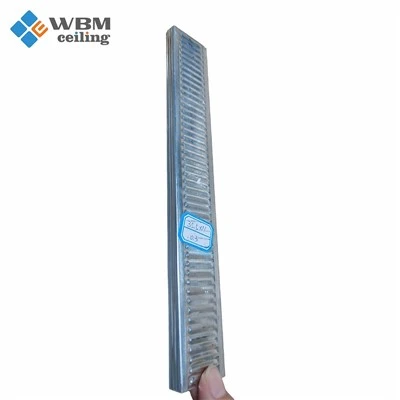
At the end of the day, the load-bearing capacity of a ceiling T grid isn’t a fixed number. It’s a combination of bar gauge, module size, installation quality, and what the ceiling is being used for. But if you do it right, you can trust that your ceiling will hold up for years, no sagging, no broken tiles, no headaches. If you’re working on a project and need to figure out what grid you need, or have questions about load capacity, reach out. We’re here to help, no sales pitch, just real answers based on what we’ve seen over two decades in the business.
Accessories References:
- Gypsum Association. (2018). Fire Resistance Design Manual. GA-600.
- Steel Framing Industry Association. (2021). Specification for Drywall Steel Framing. SFIA-7.
- National Fire Protection Association. (2020). Standard for the Installation of Sprinkler Systems. NFPA 13.
Langfang Weikaihua Building Material Co., Ltd.
Langfang Weikaihua Building Material Co., Ltd. is one of the most professional ceiling t grid manufacturers and suppliers in China, featured by quality products and low price. Please rest assured to buy discount ceiling t grid from our factory. Contact us for customized service and free sample.
Address: Peng Er Wan Villiage, Zhao Ge Zhuang Town, Wen’an County, Langfang City, Hebei Province, China
E-mail: joyce@wbm.cc
WebSite: https://www.wbmceiling.com/
