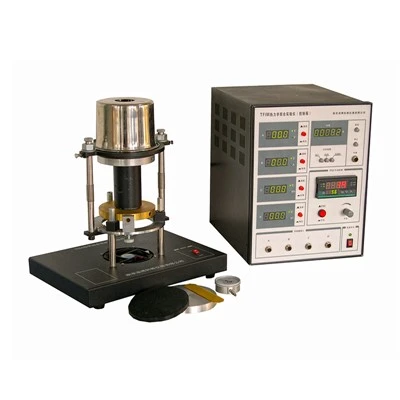
As a provider of AMO (Atomic, Molecular, and Optical) Physics Instruments, I often encounter inquiries from professionals in the chemical industry about the potential applications of our instruments in their field. AMO Physics Instruments are well – known for their precision and ability to deal with atomic and molecular – level phenomena. But can they be effectively utilized in chemical industry applications? Let’s delve into this topic. AMO Physics Instruments
1. Understanding AMO Physics Instruments
AMO Physics Instruments are designed to study atoms, molecules, and their interactions with light. These instruments can measure various physical quantities at the atomic and molecular scales, such as atomic and molecular spectra, energy levels, and atomic and molecular collisions. Some common types of AMO Physics Instruments include laser spectrometers, atomic force microscopes, and ion traps.
Laser spectrometers are fundamental tools in AMO physics. They work by shining a laser beam onto a sample and analyzing the light that is absorbed, emitted, or scattered by the atoms or molecules in the sample. By measuring the wavelength and intensity of the light, we can obtain information about the energy levels of the atoms or molecules, which is crucial for understanding their chemical properties.
Atomic force microscopes (AFMs) provide high – resolution imaging of surfaces at the atomic scale. They use a tiny probe tip to scan the surface of a sample, and the force between the tip and the sample is measured to construct an image. AFMs can reveal details about the surface morphology, chemical composition, and mechanical properties of materials, which are important factors in many chemical processes.
Ion traps are used to confine and manipulate ions. By controlling the electric and magnetic fields around the ions, we can study their quantum states, reactions, and interactions. Ion traps are particularly useful for studying fundamental chemical reactions at the single – ion level.
2. Applications in Chemical Analysis
Spectroscopic Analysis
In chemical analysis, AMO Physics Instruments offer powerful tools for identifying and quantifying chemical substances. Laser – based spectroscopy techniques, such as Raman spectroscopy and atomic absorption spectroscopy, are widely used in the chemical industry.
Raman spectroscopy uses the inelastic scattering of light to provide information about the vibrational modes of molecules. Different chemical compounds have unique Raman spectra, which can be used as "fingerprints" for their identification. For example, in the pharmaceutical industry, Raman spectroscopy can be used to analyze the chemical composition of drugs, detect impurities, and monitor the quality of raw materials.
Atomic absorption spectroscopy (AAS) is used to determine the concentration of specific elements in a sample. AAS works by measuring the absorption of light at specific wavelengths by the atoms of the element of interest. This technique is highly sensitive and accurate, making it suitable for trace – element analysis in various chemical products, such as polymers, paints, and catalysts.
Surface Analysis
The surface properties of materials often play a crucial role in chemical reactions and processes. AMO Physics Instruments, such as AFMs, can provide detailed information about the surface structure and chemistry of materials.
In the field of heterogeneous catalysis, the surface properties of catalysts are of utmost importance. AFMs can be used to image the surface of catalysts at the atomic scale, revealing the active sites and the morphology of the catalyst particles. This information can help chemists design more efficient catalysts by optimizing their surface properties.
In addition, for the development of new materials, such as thin – film coatings, understanding the surface properties is essential. AFMs can measure the thickness, roughness, and adhesion of thin films, which are important parameters for their performance in chemical applications.
3. Applications in Chemical Reaction Studies
Reaction Kinetics
Studying the kinetics of chemical reactions is fundamental in the chemical industry. AMO Physics Instruments can provide valuable insights into the reaction mechanisms and rates.
Ion traps can be used to isolate and study individual chemical reactions at the single – ion level. By controlling the initial conditions of the reaction, such as the energy and state of the reactant ions, we can measure the reaction rates and the branching ratios of different reaction pathways. This information is crucial for understanding the fundamental principles of chemical reactions and for optimizing industrial chemical processes.
Laser – induced fluorescence (LIF) is another technique that can be used to study reaction kinetics. LIF works by exciting the molecules in a sample with a laser and then detecting the fluorescence emitted by the excited molecules. By measuring the intensity and decay time of the fluorescence, we can obtain information about the population and lifetime of the excited states, which are related to the reaction rates.
Quantum Chemistry and Reaction Dynamics
AMO Physics Instruments are also important for studying quantum chemistry and reaction dynamics. Quantum mechanics plays a significant role in chemical reactions, especially at the atomic and molecular scales.
Laser – based techniques can be used to prepare and manipulate quantum states of atoms and molecules. For example, by using ultrafast laser pulses, we can control the electronic and vibrational states of molecules, which can influence the outcome of chemical reactions. This field of research, known as quantum control of chemical reactions, has the potential to revolutionize the chemical industry by allowing us to design more selective and efficient chemical processes.
4. Challenges and Limitations
Although AMO Physics Instruments offer many potential applications in the chemical industry, there are also some challenges and limitations.
One of the main challenges is the complexity and cost of the instruments. Many AMO Physics Instruments require specialized knowledge and skills to operate, and they can be quite expensive to purchase and maintain. This can be a barrier for small and medium – sized chemical companies.
Another challenge is the limited applicability of some instruments in real – world industrial environments. For example, some instruments may be sensitive to environmental factors such as temperature, humidity, and vibrations, which can affect their performance. In addition, industrial chemical processes often involve complex mixtures and harsh conditions, which may require more robust and versatile instruments.
5. Future Prospects and Conclusion
Despite the challenges, the future prospects of using AMO Physics Instruments in the chemical industry are promising. As technology advances, the cost of the instruments is expected to decrease, and their performance and usability will likely improve.
New techniques and instruments are being developed to address the limitations of current technologies. For example, efforts are being made to develop more portable and user – friendly AMO Physics Instruments that can be used in industrial settings.
In conclusion, AMO Physics Instruments have significant potential for applications in the chemical industry. They can provide valuable information for chemical analysis, reaction studies, and material development. As a supplier of AMO Physics Instruments, I am confident that our products can contribute to the advancement of the chemical industry.
Optical Instruments If you are interested in exploring how our AMO Physics Instruments can be integrated into your chemical processes or research, I encourage you to reach out to us for a detailed discussion. We are committed to providing you with the best solutions and support to meet your specific needs.
References
- Demtröder, W. (2006). Laser Spectroscopy: Basic Concepts and Instrumentation. Springer.
- Allen, M. G., & David, J. T. (1989). Laser – based Techniques for Sensing and Analysis. Wiley – Interscience.
- Sarid, D. (1991). Scanning Force Microscopy with Applications to Electric, Magnetic, and Atomic Forces. Oxford University Press.
Nanjing Longbow Scientific&Educational Instrument Co., Ltd.
As one of the most professional amo physics instruments manufacturers and suppliers in China, we’re featured by quality products and good service. Please rest assured to buy customized amo physics instruments from our factory. If you have any enquiry about pricelist, please feel free to email us.
Address: Room D, 22th floor, No.305, North Jiangdong Road, Nanjing,Jiangsu Province, China
E-mail: 79425380@qq.com
WebSite: https://www.lb-physics.com/
